May 21, 2026
How to generate intuitive experiences in digital banking
Digital banking is becoming highly efficient. Users can send money, review transactions, manage cards, and check balances in seconds. Yet despite this progress, many digital banking experiences still feel unintuitive in everyday use.
The issue is not functionality. It is interpretation.
Users are still expected to understand fragmented transaction data, recognise unclear merchants, estimate upcoming commitments, and mentally connect financial information to make sense of their situation. Even modern interfaces often place the cognitive work on the user rather than the system itself.
Creating more intuitive banking experiences starts with making financial data understandable. As explored in our article on contextual banking, enriched transaction data provides the foundation by transforming raw transaction strings into structured and contextual information.
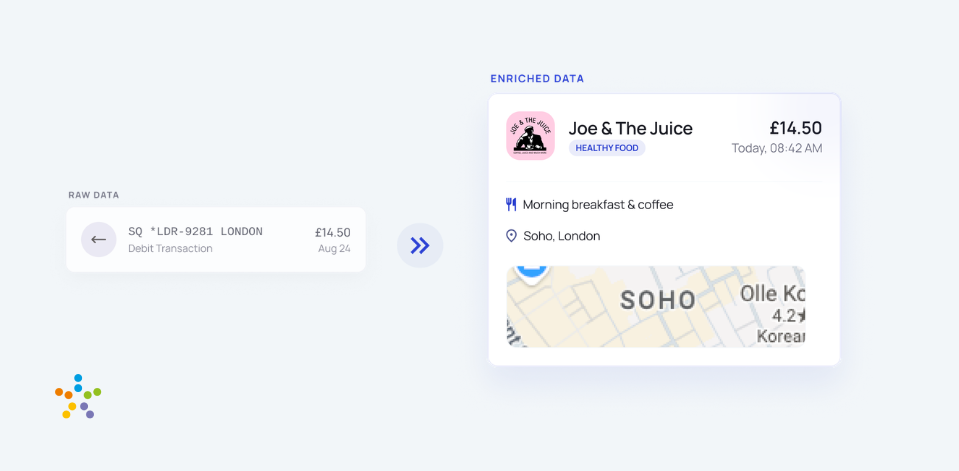
But once financial data becomes clear, the bigger challenge begins: designing banking experiences that feel natural and require less effort to understand what’s happening.
Why some banking apps still feel unintuitive
Most banking apps are still designed around financial infrastructure rather than human behaviour, structuring the experience around accounts, transactions, and balances, instead of how people naturally manage their money.
People do not think about their finances as isolated transaction records. They think about whether they can afford something, stay on top of their spending, and improve their financial situation over time.
As seen in our recent survey, users open their banking app several times per day, but that does not automatically mean the experience is engaging or useful. In many cases, users return simply to verify information, monitor balances, or reassure themselves that everything is under control.
An intuitive experience should reduce the effort required to understand financial activity. Instead of forcing users to analyse information manually, the system should help surface meaning naturally and progressively.
Designing better digital banking experiences around user behaviour
The closer digital banking experiences align with real financial behaviours, the more intuitive they become.
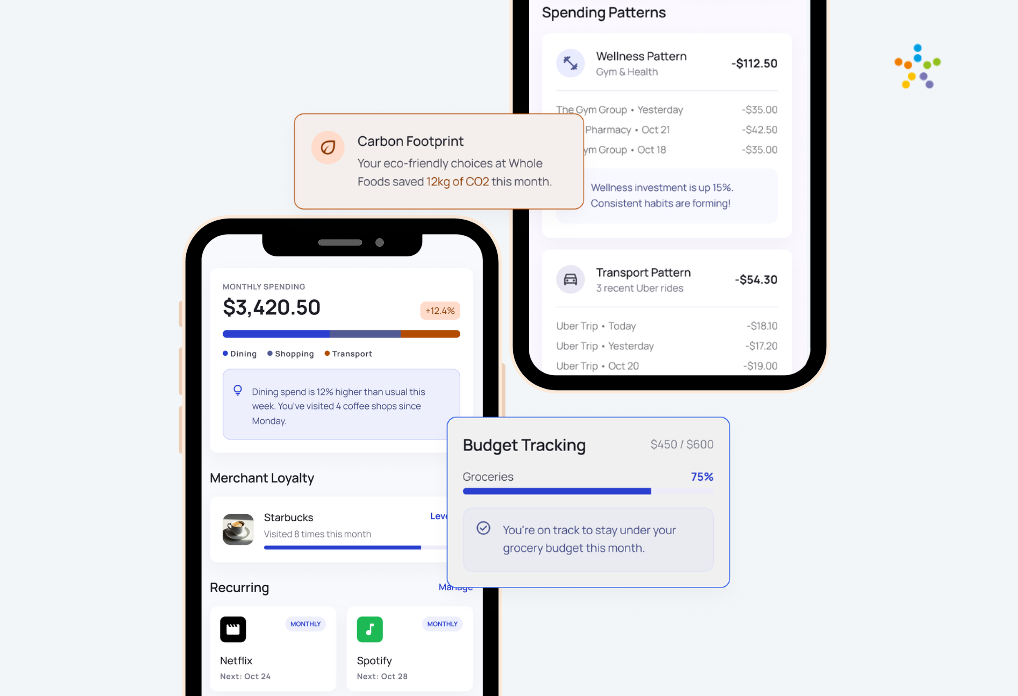
This is where contextual understanding starts to matter. Rather than simply displaying financial activity, systems can begin identifying patterns, behavioural changes, recurring commitments, and financial rhythms that reflect how users actually live and spend.
Traditional banking experiences were largely structured around products and internal systems, with customers expected to navigate accounts, cards, loans, and services independently. As digital banking evolved, newer players started focusing less on product structures and more on helping users solve everyday financial challenges.
As discussed in our article on contextual signals in banking, transaction data becomes significantly more valuable when interpreted as behavioural context rather than isolated financial events.
The role of timing in intuitive digital banking experiences
Intuition is not only shaped by clarity. It is also shaped by timing.
Financial behaviour changes continuously throughout the month. Income arrives, subscriptions renew, bills fluctuate, travel spending appears unexpectedly, and priorities shift depending on personal circumstances. Static interfaces struggle to reflect this dynamic reality because they present information without considering relevance or timing.
Recurring salary payments can help reshape how available balance is interpreted. Travel-related transactions can trigger more contextual visibility around foreign spending. Sudden changes in subscriptions or spending patterns can be surfaced proactively rather than discovered weeks later by the user.
When these interactions happen at the right moment, they feel less like mere notifications and more like support.
This matters more as banking experiences start to sit alongside other digital services where relevance is expected by default. Recommendation engines, personalised feeds, and adaptive interfaces have already shaped expectations across retail, entertainment, and mobility platforms. Financial experiences are beginning to move in the same direction.
From financial visibility to meaningful guidance
As we mentioned before, traditional digital banking was built around visibility. Helping users access their financial information quickly, securely, and in one place. But visibility on its own is no longer enough.
Users increasingly expect systems to help them interpret financial activity and support decision-making in real time. This is especially relevant in what we explored in intelligent daily banking experiences, where users interact with their finances continuously through small everyday decisions rather than occasional account reviews.
Questions are becoming more contextual and forward-looking:
- What will my finances look like after upcoming bills?
- Am I spending more than usual this month?
- Could I save more without significantly changing my lifestyle?
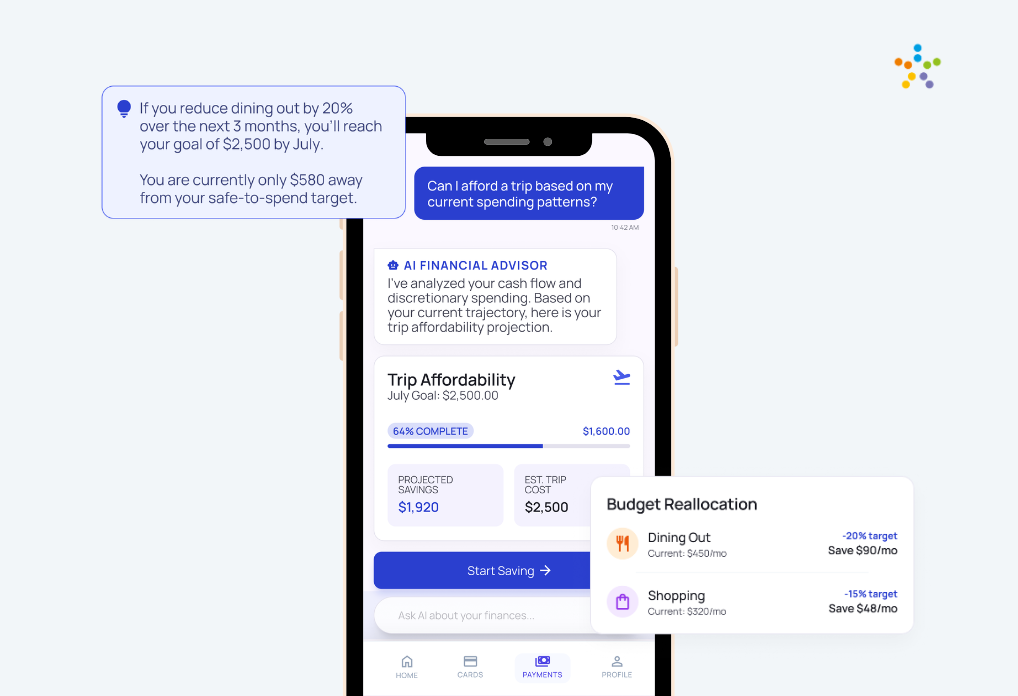
These are not questions that can be answered by static information alone. They require context, interpretation, and an understanding of how behaviour evolves over time.
At this point, banking experiences should start moving beyond reporting what has happened, towards helping users understand what it means in their current situation.
Building more intuitive experiences in digital banking
The future of intuitive banking will not be defined by how many features exist within an app, but by how effectively those experiences simplify financial decision-making for the user.
Clear financial data creates understanding. Behavioural context adds relevance. Timing turns it into guidance.
Together, these elements allow banking experiences to move beyond static information display and become more adaptive to everyday financial behaviour.
As financial activity becomes increasingly digital, the experiences that succeed will likely be the ones that minimise interpretation, surface context naturally, and help users feel more confident in understanding their financial lives.

Marketing & Comms Director
Seasoned Marcomms professional with 8+ years of experience in brand management and digital communications. I thrive on creating impactful content and creative strategies, leveraging location-enhanced data enrichment insights for financial and digital technology companies. In my spare time, I nurture my mind and spirit through creative pursuits and immersive reading.